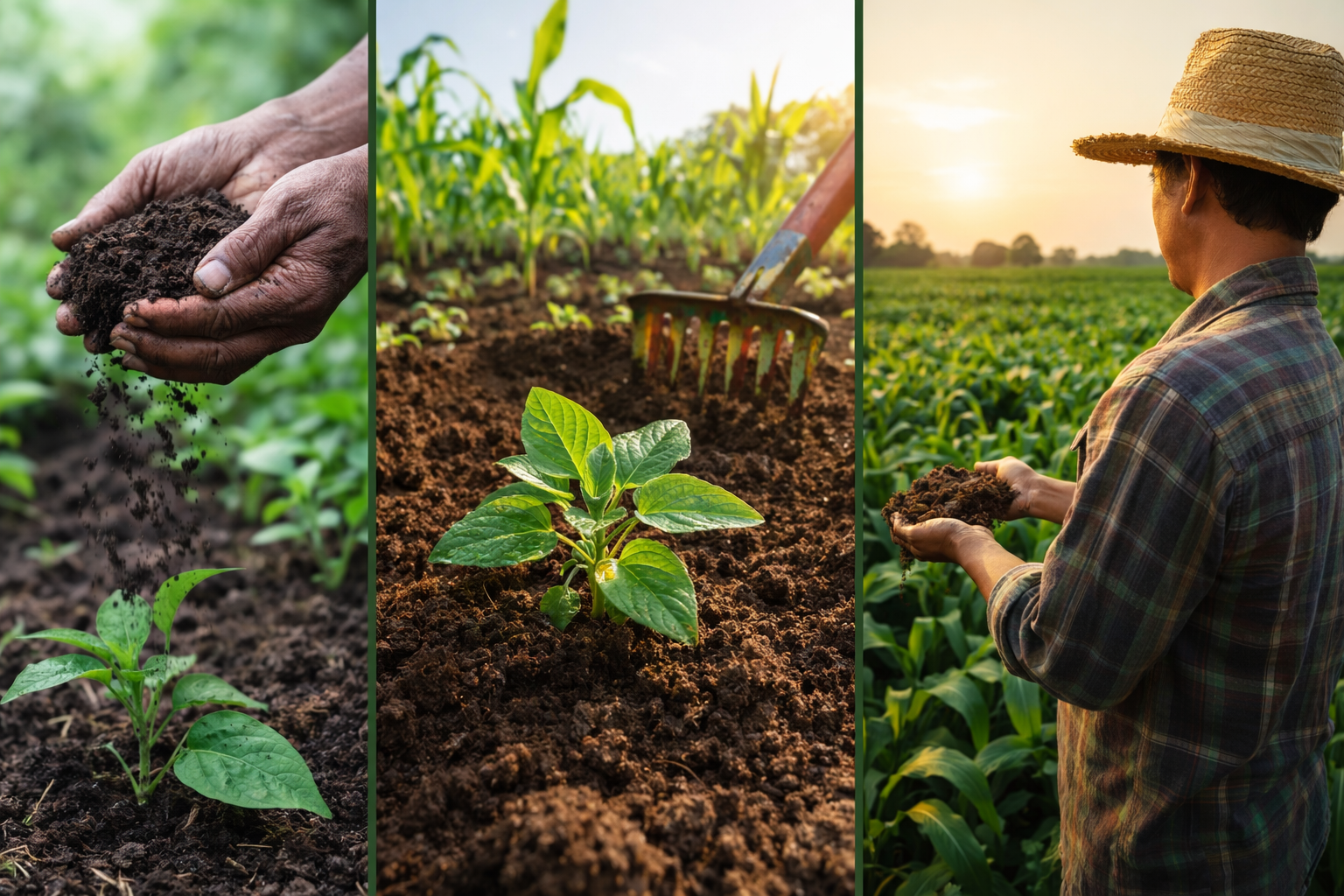
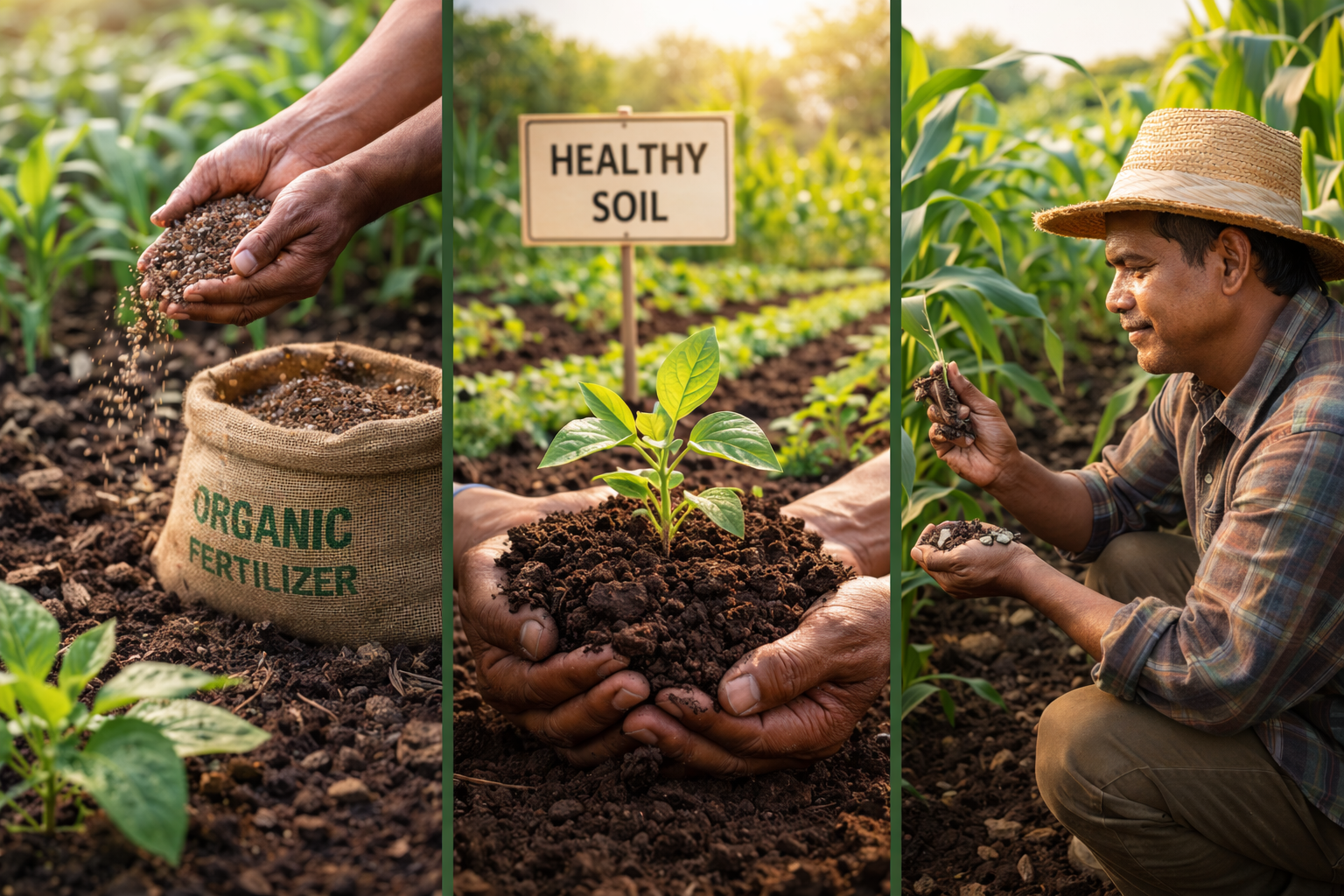
How Healthy Soil Leads to Higher Crop Productivity
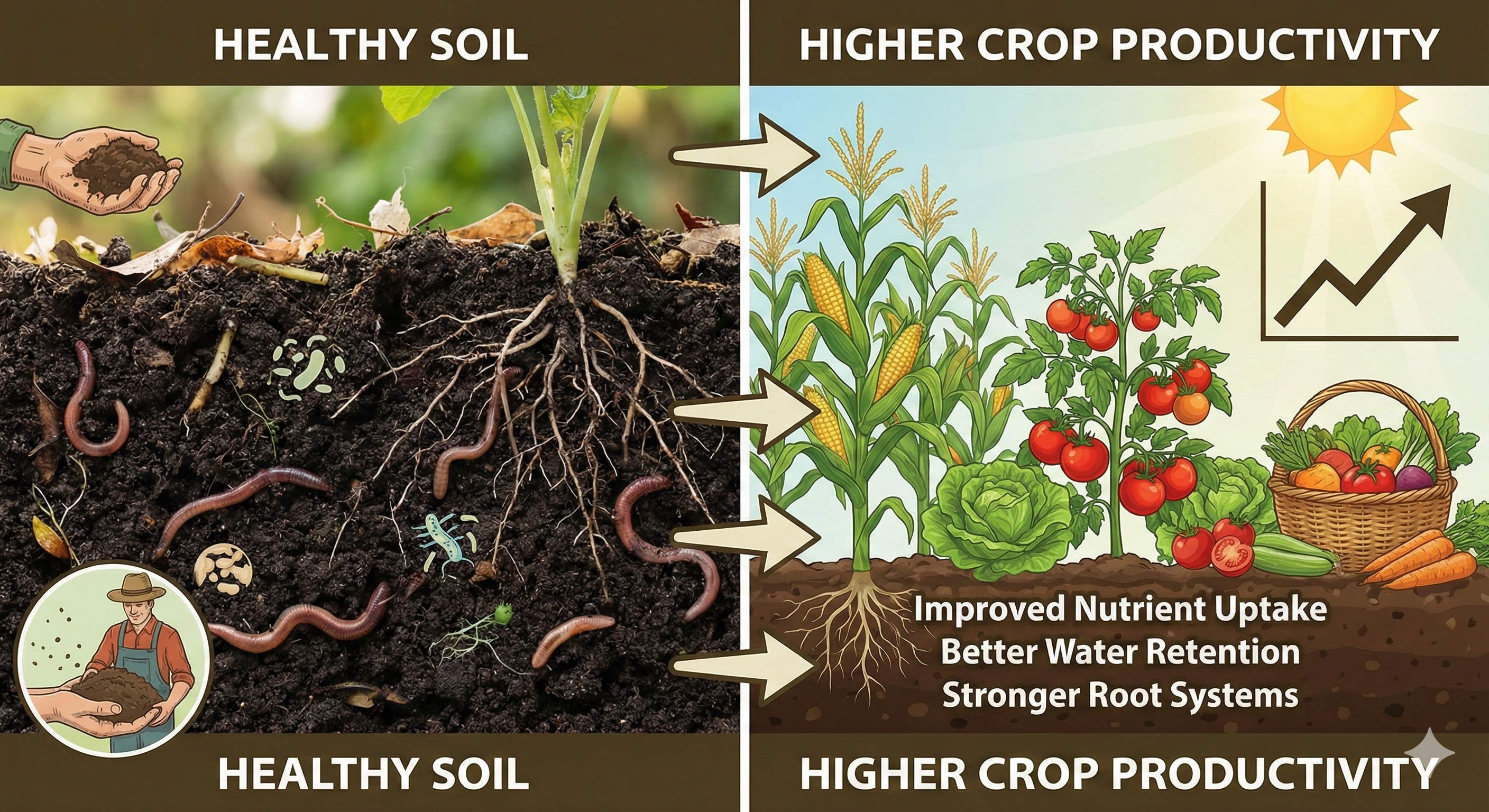
Soil health is the foundation of successful and sustainable agriculture, yet it is often neglected in modern farming practices. Healthy soil is not just a growing medium for crops; it is a living ecosystem that supports plant growth by providing essential nutrients, organic matter, beneficial microorganisms, and adequate water-holding capacity. When soil health is maintained, crops grow stronger, yields improve, and farming becomes more resilient to environmental challenges.
Over time, excessive use of chemical fertilizers, pesticides, and improper farming methods can severely degrade soil quality. Such practices reduce organic matter, disrupt microbial activity, and weaken soil structure. As a result, soil loses its ability to retain nutrients and moisture, leading to poor crop performance. Plants grown in unhealthy soil develop shallow root systems, show nutrient deficiencies, and become more susceptible to pests, diseases, and climate stress such as drought or heavy rainfall.
Improving soil health begins with restoring soil fertility through organic matter and natural soil conditioners. Organic inputs enhance soil structure by improving aeration, porosity, and aggregation. This allows roots to penetrate deeper into the soil, enabling plants to access water and nutrients more efficiently. Deeper root systems also make crops more resilient to environmental stress, helping them survive dry periods and recover quickly after adverse conditions.
Another key aspect of healthy soil is biological activity. Beneficial microorganisms play a vital role in breaking down organic matter and converting nutrients into forms that plants can absorb. These microbes also help suppress harmful pathogens and improve nutrient uptake. By encouraging microbial diversity through organic soil amendments, farmers can naturally improve crop health while reducing reliance on chemical inputs.
Water management is closely linked to soil health. Soils rich in organic matter have better water-holding capacity, which reduces water runoff and prevents nutrient loss. At the same time, improved drainage protects crops from waterlogging. Balanced soil moisture ensures consistent plant growth and contributes to stable yields, even under unpredictable weather conditions.
Sustainable soil management practices not only enhance immediate crop performance but also ensure long-term agricultural productivity. Healthy soil remains fertile for years, reducing the need for excessive external inputs and lowering overall farming costs. Farmers who invest in soil health benefit from improved yield quality, better soil resilience, and more reliable production season after season.
Vajra Green Leaf’s soil health solutions are specifically designed to rebuild soil vitality and restore natural balance.
By combining organic matter, natural nutrients, and biological enhancers, these solutions improve soil structure, increase microbial activity, and enhance nutrient availability. Vajra Green Leaf focuses on long-term soil regeneration rather than short-term fixes, helping farmers achieve sustainable growth and consistent results.
In conclusion, soil health is not an optional aspect of farming—it is a necessity. By adopting sustainable soil improvement practices and using effective soil health solutions, farmers can protect their land, improve crop performance, and secure long-term productivity. Healthy soil leads to healthier crops, higher yields, and a more sustainable future for agriculture.
Michael Chen
Author at Vajra Green Leaf. Passionate about technology and innovation.